About Bitcoin.
What is Bitcoin?
Bitcoin is digital money that people can hold and send to each other directly, without a bank in the middle. A public ledger called the blockchain records every transaction. Thousands of independent computers around the world keep their own copy of it and check it against the same rules.
Bitcoin is also the name of the network that runs this system. Only 21 million bitcoin will ever exist, and anyone with an internet connection can use it.
Who created Bitcoin?
Someone using the name Satoshi Nakamoto published the Bitcoin white paper in October 2008. Nobody knows whether Satoshi is one person or a group. Satoshi mined the first block, the genesis block, on January 3, 2009, and stepped away from the project by 2011.
Many people have claimed to be Satoshi, but none of them has proved it. Today no single person or company controls Bitcoin, so the network runs the same way with or without its creator.
How does Bitcoin work?
When you send bitcoin, your wallet signs the transaction with a private key that only you hold and broadcasts it to the network. Roughly every 10 minutes, miners bundle pending transactions into a new block. To add that block, a miner has to spend real computing power solving a puzzle. This process is proof of work, and the winning miner earns newly created bitcoin plus the fees in the block.
Nodes, the computers that keep a copy of the blockchain, check every block against Bitcoin's rules and reject any that break them. The mining reward halves about every four years, so new bitcoin enter circulation more slowly over time until the supply reaches 21 million around the year 2140.
About the bitcoin price.
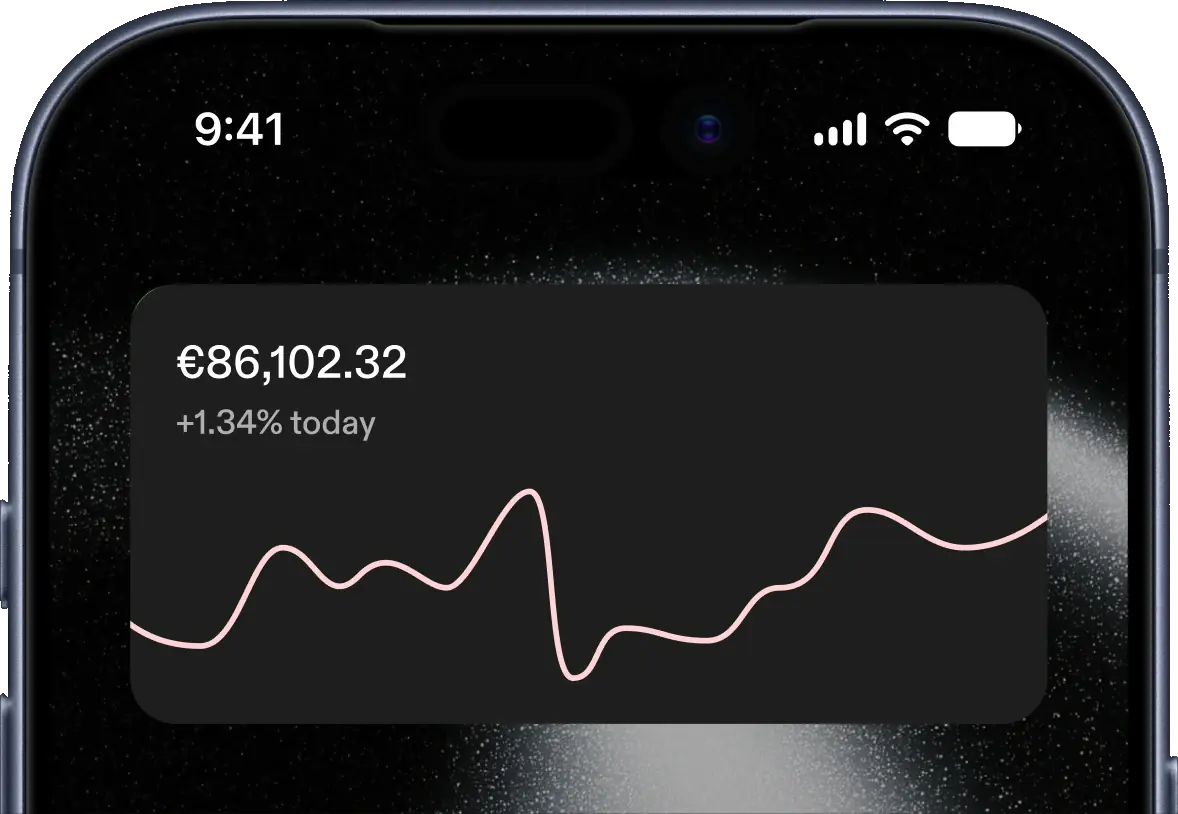
Learn moreTrack the bitcoin price.
Add a widget to your phone to monitor price movements.

Stack without stress.
Build your position with confidence, without second-guessing every move.
Accumulate steadily
Stop trying to time the market. Buy bitcoin on a cadence that fits your cash flow: hourly, daily, weekly, biweekly, or monthly.
Recurring purchasesBuy the dip while you sleep
Set your price and sit back. Your purchase or sale triggers when the price reaches your target. Ready, aim, Strike.
Target orders